
Galmudug Public Works Minister Calls for Immediate End to Clan Conflict in Galgaduud


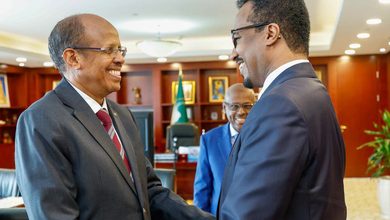
Galmudug Minister of Public Works, Ahmed Dhiblawe Aseyr, has issued an urgent call for peace to rival clans involved in fighting in an area between the villages of Ali Afrah and Towfiiq in Galgaduud region.
The minister called on the warring sides to immediately end the violence, warning that clan-based conflict causes widespread humanitarian and social consequences, including deaths, injuries, displacement, poverty, family breakdown, hunger, disease, hatred and retaliation, as well as damage to communities and infrastructure.
“It is unacceptable that in 2026 people are still killing one another along clan lines while widespread drought, water shortages, food insecurity and the threat posed by terrorist groups are affecting our communities,” Caseyr said.
He particularly appealed to community elders and influential leaders in the affected areas to urgently work toward ending the fighting, saying true courage lies in stopping conflict and protecting fellow members of the community.
“Today, there is no courage in killing your brother or being killed by your brother,” the minister said, urging the warring parties to exercise restraint and wisdom and avoid actions that could further escalate the conflict.
Aseyr also addressed communities from El Buur, El Dheer, Galhareeri, Galcad and Harardhere, urging them to reject inter-clan violence and instead focus on peace, development and improving their livelihoods.
“Please, stop the conflict. Aspire to development and progress. Others have moved ahead while you remain isolated by conflict and terrorism—will you continue killing one another?” Caseyr said.
The minister also recalled previous civil conflicts that he said had resulted in significant loss of life and property, questioning what communities ultimately gained from those confrontations.
“Do you remember the devastating conflict that began between Ina Gaaboow and Ina Waaloow? Do you know that nearly 1,000 people lost their lives in those clashes and that more than 39 settlements were burned, resulting in widespread displacement?” he said.
He said the previous conflicts had affected communities whose members had long lived as neighbours, attended the same schools and shared livelihoods.
“How many people who were once your neighbours, classmates and fellow community members have you lost? What was gained? Was land taken from relatives? No. Should we continue killing one another while the orphans of those conflicts grow up? No,” Caseyr said.
The minister’s appeal comes amid renewed concerns over the humanitarian and social consequences of clan conflict in parts of Galgaduud, where communities are also facing challenges linked to drought, food insecurity and insecurity.
Email: info@leadershipmagazine-som.com